With property lines and Danbury permit rules in mind, you should call 811 before digging, avoid buried utilities, set posts in concrete, and choose low-maintenance, long-lasting vinyl panels for safe, durable results.
Key Takeaways:
- Check Danbury, CT zoning and HOA rules and call 811 before digging; plan the fence line to avoid underground utilities, irrigation lines, and major tree roots.
- Set posts below the local frost line (typically 3-4 ft in Connecticut) using concrete footings and compacted backfill; provide drainage to reduce frost heave.
- Leave 2-4 inches clearance between vinyl panels and planting beds, choose UV‑stabilized vinyl for long-term color and cold resistance, and use stepped posts or adjustable rails to follow slopes and curves.
Assessing Danbury’s Topography and Soil Conditions
Danbury’s varied topography requires you to assess slope, drainage, and soil type before fencing; poor drainage and compacted clay can undermine posts, while sandy soils need different anchoring. You should perform a soil test and map slopes to plan post depth and placement.
Managing Rocky Terrain and Glacial Till
Rocky soils and glacial till mean you must locate boulders and bedrock before digging; hitting stone can bend equipment and impede posts. You can use rock anchors, angled posts, or concrete footings set above rock to secure fencing where standard post holes aren’t possible.
Factoring in Connecticut’s Seasonal Freeze-Thaw Cycles
Winter freeze-thaw cycles cause frost heave, so you must set posts below the frost line and use proper backfill and drainage. Consider concrete footings and flexible post brackets to reduce shifting and maintain fence alignment through seasonal movement.
You should dig posts below the local frost line (commonly around 3 feet in Connecticut) and use coarse gravel drainage before concrete to limit water retention. Protect against frost heave by tamping backfill, allowing expansion space, and using concrete footings sized to resist uplift; periodic inspections after thaw catch shifted posts early.
Integrating Vinyl Fencing with Existing Landscaping
You can align vinyl panels around beds and trees, leaving a safe setback from trunks and root zones; avoid heavy excavation near drip lines to prevent root damage, and verify grading to preserve drainage and plant health.
Protective Strategies for Mature Root Systems
Protecting mature roots means you should hand-dig postholes, position heavy equipment well beyond drip lines, and opt for surface-mounted posts where roots are dense; consult an arborist if roots exceed two inches to avoid structural harm and tree decline.
Designing Borders for Garden Beds and Water Features
Design borders so you maintain clear edging and adequate drainage, use low-profile posts near beds, seal fence bases at ponds, and choose permeable groundcover to prevent water pooling that harms plants.
Assessing bed and water-feature interfaces, you should leave a 6-12 inch planting buffer, grade soil to slope away from the fence, install geotextile and crushed stone under panels near ponds to reduce erosion, and use post sleeves or surface brackets to avoid cutting pond liners or major roots, preventing leaks and decay to nearby plantings.
Selecting Vinyl Styles for New England Aesthetics
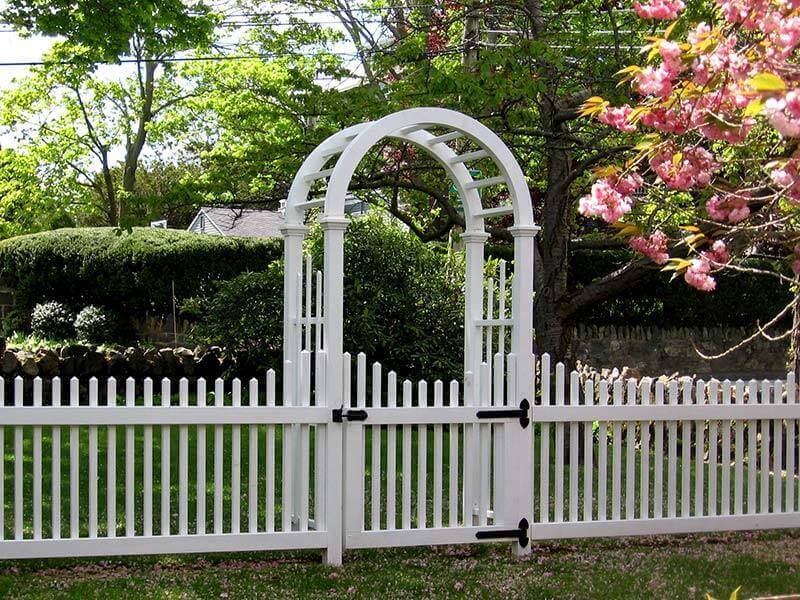
Select vinyl profiles that mimic traditional New England charm-picket, ranch rail, and shadowbox-so you keep neighborhood character while you enjoy low-maintenance, long-lasting performance.
Balancing Privacy with Traditional Picket Designs
Consider taller picket or board-on-board styles where you want screening; you can preserve a classic silhouette while gaining increased privacy without blocking views to mature shrubs.
Choosing UV-Resistant Finishes for Sun-Exposed Areas
Choose finishes with UV stabilizers and lighter tones to reduce heat absorption and help prevent fading and warping, so your fence stays attractive under Danbury sun.
Apply selection criteria: look for manufacturer-stated UV inhibitor content, a multi-year fade warranty, and acrylic-enriched coatings for better color retention; dark colors on south-facing runs increase the risk of warping. You should also choose stainless hardware, allow proper expansion gaps, and schedule gentle cleaning-these steps deliver longer life and low-maintenance results in Danbury’s sun and freeze cycles.
Technical Installation Around Obstacles
You must mark utilities and hand-dig near trees to avoid root damage; use post sleeves and varied spacing to fit curves. Hitting unknown lines is dangerous, so call 811 before you dig. Proper bracing ensures a professional finish around features.
Implementing Stepped vs. Sloped Fence Sections
Stepped runs let you match grade with clean post lines, while sloped rails keep consistent spacing; you choose based on slope and maintenance. Cut panels to the rise and use drop brackets for a stable transition; avoid long unsupported spans.
Custom Cutting Panels for Seamless Integration
Custom cuts let you fit panels around planters and boulders; you should measure twice and score with a fine-tooth blade for a clean cut. Seal exposed edges and use matching caps to keep a finished look that resists moisture.
Carefully template irregular shapes and transfer marks to the panel backs; you should clamp panels to a worktable and cut with a fine-tooth carbide blade, supporting cuts to avoid chipping. Deburr raw edges, apply manufacturer-approved sealant to exposed PVC, and reinforce trimmed stiles with metal brackets. Overcutting vertical supports creates dangerous weakness under wind loads, so test-fit and brace before finishing for a clean appearance.
Regulatory Compliance and Permitting in Danbury
Danbury requires permits for most fence installations, so you must consult the Building Department and Planning & Zoning before work begins to avoid fines or forced removal.
Understanding Local Zoning Height Restrictions
Zoning rules set maximum fence heights and sight-line limits; you should verify local codes (commonly 4-6 feet) for front and rear yards to prevent permit denial or removal.
Property Line Verification and Setback Requirements
Survey the property line with a certified survey or title map, call 811 before digging, and confirm required setbacks so you avoid encroachments and legal disputes with neighbors.
If you rely on an informal boundary or a neighbor’s marker, secure a certified survey and written neighbor consent; most permits require a stamped site plan showing fence placement and setbacks, and failure can trigger stop-work orders, fines, or mandatory removal.
Longevity and Maintenance in Landscaped Environments
Vinyl fences resist moisture and require low upkeep; you should clear debris, trim adjacent plants, and inspect fastenings annually to preserve appearance and prevent hidden rot where posts contact soil.
Preventing Algae Growth in Shaded Garden Zones
Shaded areas collect moisture; you should increase airflow, prune overgrowth, and use a mild, plant-safe cleanser to limit slippery algae without harming beds.
Safe Cleaning Practices Near Ornamental Plants
When washing near ornamentals, you should avoid bleach, test cleaners on a hidden spot, and rinse soil and foliage promptly to reduce chemical damage.
Always protect nearby ornamentals by laying down plastic or burlap and wetting soil before cleaning to dilute runoff; you should use low-pressure rinses and plant-safe products (diluted castile soap or oxygen bleach) because never let strong sodium hypochlorite contact foliage or roots. You must mop up pooled runoff, avoid spraying on windy days, and rely on the fence’s non-porous vinyl surface to resist staining so you can clean without harming beds.
Summing up
Installing vinyl fencing around landscaping features requires more than simply placing panels along a property line. In Danbury, factors like tree roots, drainage, frost movement, and zoning rules all influence how well your fence performs over time.
With proper planning — including safe post placement, thoughtful spacing around planting beds, and the use of durable, UV-resistant vinyl — homeowners can protect both their landscape and their investment. The right installation approach helps prevent shifting, root damage, and drainage issues while maintaining a clean, cohesive look throughout the yard.
At Quality Fence, Inc., as a fence contractor specialize in installing vinyl fencing that works seamlessly with your outdoor environment. From navigating slopes and garden layouts to ensuring compliance with Danbury regulations, our team designs solutions that balance durability, aesthetics, and long-term performance.
If you’re planning to install vinyl fencing around your landscaping, contact Quality Fence, Inc. to request an estimate and ensure your project is built with both your property and your plants in mind.