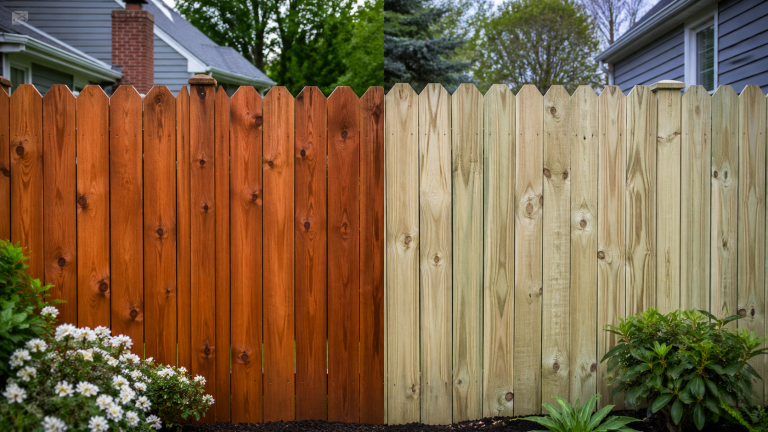
It’s up to you: board-on-board delivers superior privacy and minimal gaps, while stockade gives lower cost and easier repair but more visible gaps and wind vulnerability, so weigh privacy needs against budget and Danbury weather.
Technical Comparison of Fence Constructions
| Board-on-Board | Stockade |
|---|---|
| Overlapping planks create continuous coverage, deflect wind, and hide seams for superior privacy. | Edge-to-edge pickets speed installation and cut cost, but can expose small gaps as boards shrink. |
| Higher lumber use and longer install time deliver better sound dampening and privacy. | Easier repairs and lower material needs; expect more maintenance to prevent rot. |
The Overlapping Design of Board-on-Board
You get overlapping planks that form near-solid privacy and reduce wind pressure, though installation uses more lumber and time.
The Side-by-Side Assembly of Stockade
Stockade pickets sit edge-to-edge so you gain faster installation and lower cost but may see narrow gaps over seasons.
Expect seasonal shrinkage to open gaps, so you should plan regular sealing and inspections to limit moisture intrusion and rot.
Privacy and Coverage Performance
Privacy gives you strong coverage in Danbury, with board-on-board’s overlapping planks forming a complete visual barrier, while stockade fences may develop visible gaps from seasonal shrinkage that reduce seclusion and security.
Achieving Total Seclusion with Board-on-Board
Board-on-Board offers you near-total seclusion by overlapping each board to eliminate sightlines; that design creates a solid, consistent barrier that withstands Danbury weather with minimal viewing gaps.
Addressing Potential Gaps and Shrinkage in Stockade
Stockade fences give you a classic, economical look but their side-by-side pickets can pull apart as wood dries, producing privacy-compromising gaps that require regular attention.
Shrinkage depends on species, moisture, and installation; you should pick kiln-dried lumber, tight fastening, and periodic checks so gaps stay minimal and privacy remains intact.
Durability Against Danbury Weather Patterns
Board-on-board gives you overlapping boards that shed rain and limit snow intrusion, while stockade often leaves small gaps. You gain superior moisture protection and privacy, but you must schedule sealing and repairs to prevent rot from Danbury’s freeze-thaw cycles.
Structural Integrity During New England Winters
Wood fences face heavy snow and ice that can warp boards and stress posts; you should favor deeper footings and cross-bracing. Board-on-board spreads loads better than single-layer stockade, so use reinforced posts and frequent inspections to avoid post heaving or failure during freezes.
Wind Resistance and Airflow Management
Stockade design lets more wind pass, reducing uplift but decreasing privacy; you can choose partial gaps to balance airflow and coverage. Consider wind load pressure when spacing pickets and selecting post size to prevent panel blowout on Danbury’s gusty days.
When you assess wind resistance, calculate exposed length and typical gust speeds; you should set posts at least 3 feet deep in concrete, use 4×4 or 4×6 posts sized for span, and allow intentional gaps or lattice to dissipate pressure. Board-on-board gives you solid coverage but can act like a sail-use diagonal bracing and heavier posts to reduce uprooting and panel blowout. Stockade with staggered gaps lowers pressure but needs tighter hardware and inspection for loose pickets. For maximum safety, choose pressure-treated or cedar, install galvanized fasteners, and plan post spacing based on local wind loads.
Aesthetic Value for Connecticut Curb Appeal
Danbury homeowners find both styles influence curb appeal, but you can choose a design that emphasizes privacy or ornamental texture; the right fence boosts property value and withstands Connecticut weather.
The Dimensional Texture of Board-on-Board
Board-on-board delivers layered planks that create deep shadow lines, so you get enhanced visual depth and dependable privacy while blending with New England architecture.
The Traditional Rustic Look of Stockade
Stockade offers a flat, traditional profile that gives you a rustic, classic look and solid screening, though exposed faces can show weathering faster without upkeep.
You’ll find stockade built from individual pickets nailed side-by-side on rail supports, making it cost-effective and straightforward to repair; expect timeless curb appeal, but plan for regular sealing to limit rot and warping in Danbury’s freeze-thaw cycles.
Cost-Benefit Analysis for Local Homeowners
You must weigh upfront expense versus coverage: board-on-board delivers superior privacy and fewer gaps but often costs more to install, while stockade lowers initial spend yet may leave perimeter exposed or need extra panels to match coverage.
Initial Installation and Material Investment
Installation costs mean you pay more for heavier posts, double-layer boards, and hidden fasteners on board-on-board; expect higher material and labor expenses compared with basic stockade, which can save you up-front but may compromise continuous coverage.
Long-Term Maintenance and Lifecycle Costs
Maintenance will require you to seal, replace rotten slats, and treat insect damage; stockade may need more frequent repairs where gaps expose boards, while board-on-board often reduces water intrusion and stretches service life.
Climate in Danbury subjects wood to freeze-thaw cycles, moisture, and UV; you must budget for regular sealing every 2-3 years, sanding, and occasional board replacement. Inspect posts for rot and treat insect activity quickly-untreated rot and insect damage can force full sections to be rebuilt. Properly maintained, board-on-board typically offers a longer service life and lower lifetime cost despite higher initial outlay.
Material Selection for the Danbury Climate
Danbury’s freeze-thaw cycles and summer humidity mean you should choose wood that resists moisture and insects; opt for cedar or pressure-treated pine to maximize longevity and visual coverage.
Optimal Wood Species for Longevity
Cedar offers natural rot and insect resistance, while pressure-treated pine provides cost-effective strength; you should weigh cedar’s durability against pine’s affordability for long-term coverage.
Protecting Against Local Humidity and Moisture
Sealing end grains and applying high-quality stains will reduce water penetration, helping you avoid rot and mold that compromise coverage and structure.
Regularly inspect posts, provide ground clearance and slope soil for drainage, and avoid standing water against boards; you should use stainless steel fasteners, cap rails, and a quality stain, then re-seal every 2-3 years to prevent rot and prolong coverage.
Final Words
Choosing between board-on-board and stockade fencing isn’t just about appearance — it’s about how your fence will perform over time in Danbury’s real-world conditions.
Board-on-board offers stronger privacy, better coverage, and improved protection against weather exposure, making it a smart long-term investment for homeowners who prioritize seclusion and durability. Stockade fencing, on the other hand, remains a practical and cost-effective option for those seeking a traditional look with simpler repair needs — as long as ongoing maintenance is part of the plan.
Ultimately, the right choice depends on your:
- Privacy expectations
- Property exposure to wind and weather
- Long-term maintenance preferences
- Budget considerations
At Quality Fence, Inc., we help Danbury homeowners make these decisions with confidence. Our team understands how local climate, terrain, and installation methods impact fence performance — not just on day one, but for years to come.
If you’re planning a new wood fence and want expert guidance on which style best fits your property, we’re here to help you design a solution that balances privacy, durability, and long-term value.
Reach out to Quality Fence, Inc. to discuss your project or request an fence estimate — and let’s build a fence that truly fits your home.